Generation
The extent to which an AI system creates, transforms, predicts, recommends, synthesizes, or otherwise produces outputs from available inputs and context.

Solutions by Jewel · Architecture / Framework Resource · V1.0
A cross-cutting governance architecture for AI systems operating across generation, assistance, agency, autonomy, digital and physical environments.
The architecture provides a common governance structure for examining what an AI system can do, where and how it operates, what authority it has, what evidence its operation produces, who remains accountable, and how governance persists as conditions change.
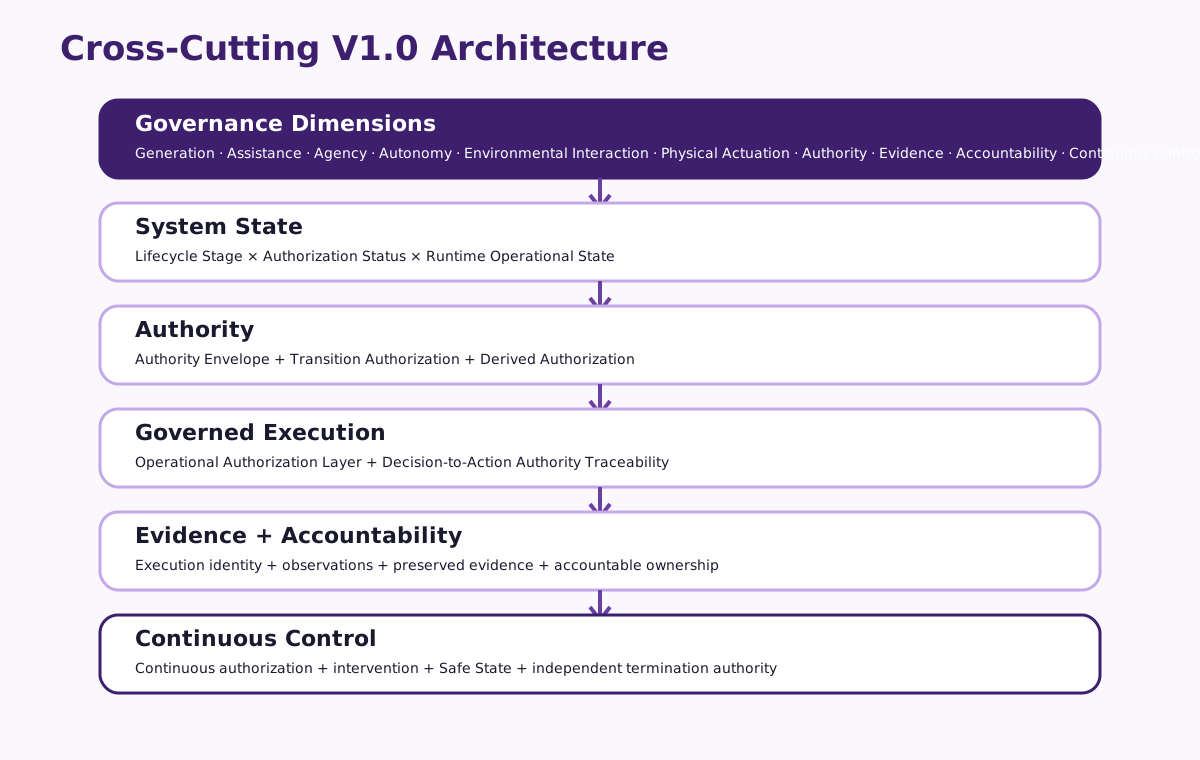
Executive Summary
The SBJ AI Governance Architecture V1.0 is designed to govern AI systems through capabilities, operational conditions, authority, evidence, accountability, and continuous control.
Its Ten Governance Dimensions provide a common structure across different AI technologies and deployment models. Cross-cutting architectural concepts then govern system state, authorization boundaries, downstream execution, evidence continuity, intervention, and accountability.
V1.0 also provides a conceptual Operational Authorization Layer connecting identity and purpose to permitted action while preserving evidence and accountability around execution.
What the Architecture Governs
The Governance Dimensions characterize capabilities and governance conditions that may exist within an AI system. They may overlap. They are not maturity stages.
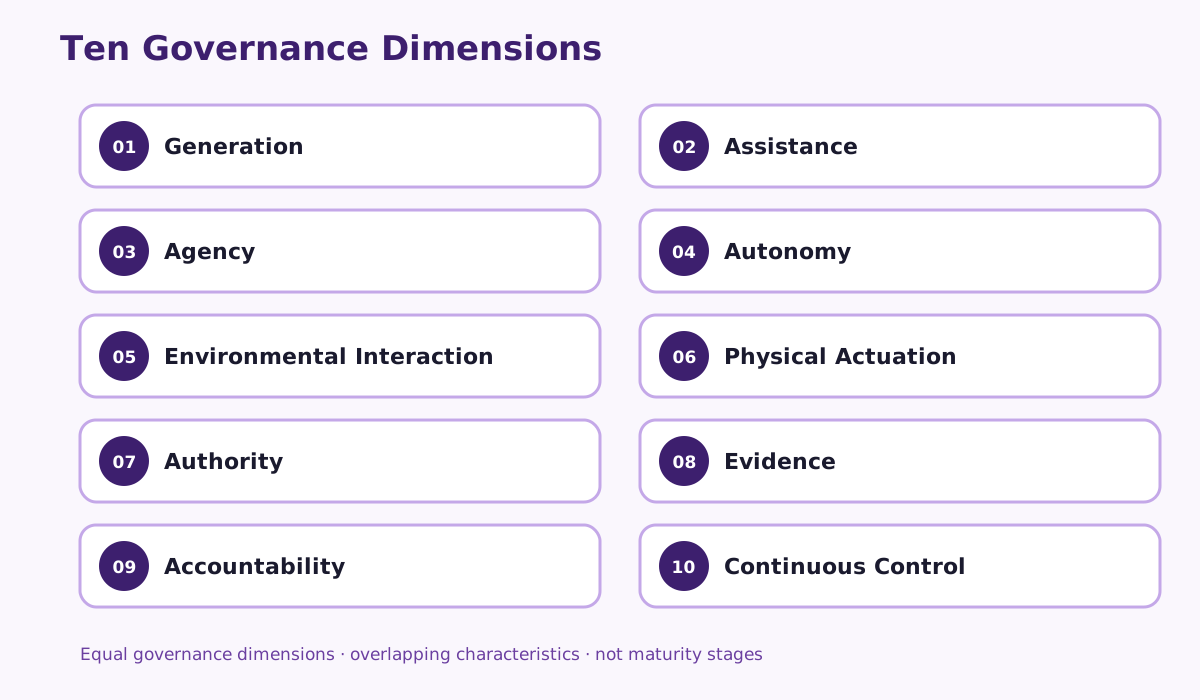
The extent to which an AI system creates, transforms, predicts, recommends, synthesizes, or otherwise produces outputs from available inputs and context.
The role an AI system performs in supporting human activity, judgment, decision-making, analysis, creation, or execution.
The capacity of an AI system to pursue a defined objective through planning, task selection, tool use, sequencing, or consequential action.
The degree to which an AI system can operate, decide, or act without contemporaneous human direction or approval.
The extent to which an AI system receives information from, interprets, responds to, or changes conditions within a digital or physical operating environment.
The capacity of an AI system to produce physical action through vehicles, robotics, machinery, devices, infrastructure, or other actuated systems.
The formally permitted scope within which an AI system, agent, or governed actor may act, including applicable boundaries, approvals, credentials, targets, conditions, and limitations.
The records, observations, artifacts, logs, approvals, decisions, and other information required to establish what occurred and under what governed conditions.
The assignment and preservation of responsibility for authorization, oversight, operation, intervention, outcomes, and governance decisions associated with an AI system.
The ongoing monitoring, reassessment, intervention, restriction, and governance necessary to keep an AI system within approved conditions throughout operation and lifecycle change.
Public Architecture Map
Three-Axis System State
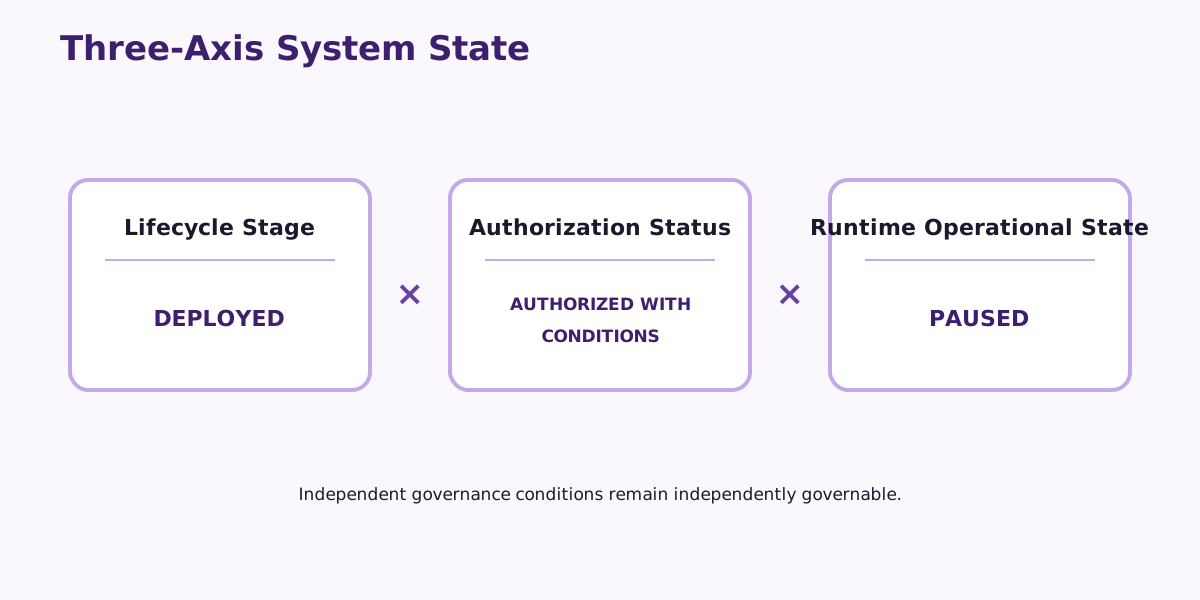
V1.0 represents system state across three independently governable conditions:
Lifecycle Stage × Authorization Status × Runtime Operational State
The purpose is to distinguish where a system exists in its lifecycle, whether the system currently possesses authority to operate, and what the system is doing operationally.
Internal state-transition enforcement rules are outside the public V1.0 disclosure.
Authority Architecture
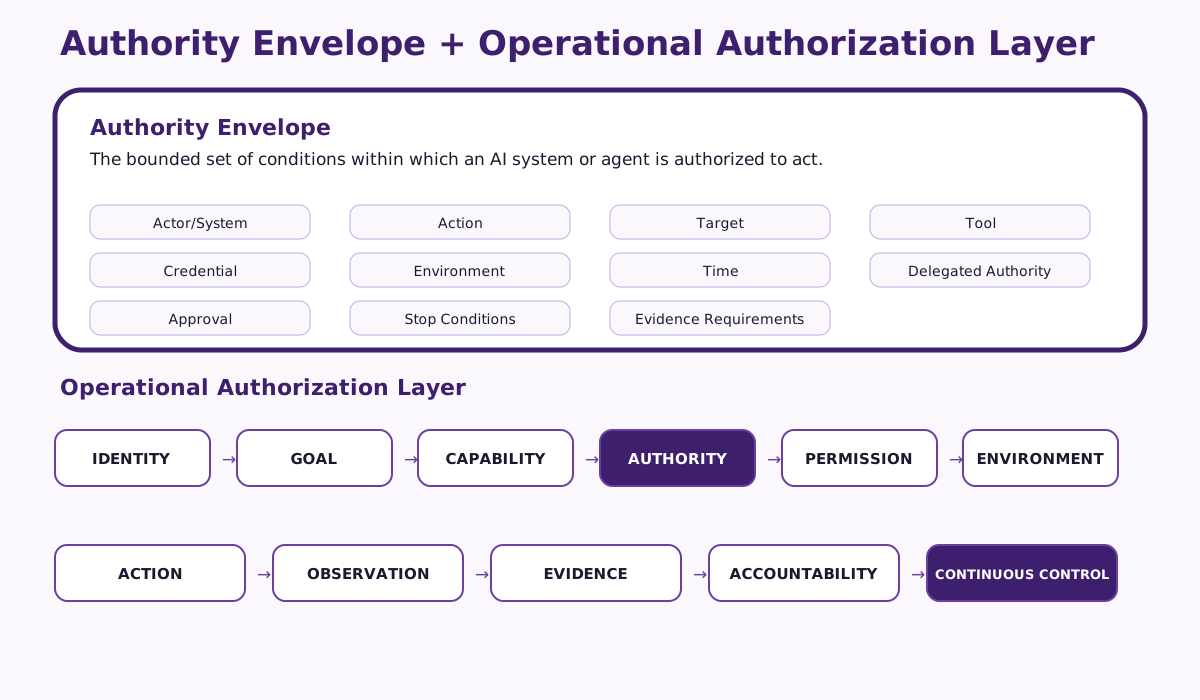
The bounded set of conditions within which an AI system or agent is authorized to act.
Conceptual conditions may include:
Production authorization schemas, enforcement logic, condition derivation, and internal control mappings remain proprietary.
Cross-Cutting Authorization Concepts
Transition Authorization — Governance of whether and under what approved conditions a system may cross a governed environment, lifecycle, privilege, capability, autonomy, or consequence boundary.
Derived Authorization — Newly scoped authority issued as the result of an event, state, decision, validation, remediation, or authorized transition. Derived Authorization does not automatically transfer, revive, or expand previous authority.
The ability to connect a governed decision to the downstream systems, tools, services, execution steps, and actions through which it is carried out.
Recognition that a downstream system or execution component may require its own valid authority for an action even when the request originated from an authorized upstream actor.
A governance identity associated with the particular execution instance involved in a governed action, supporting traceability across system, version, environment, and execution context.
Preservation of governance-relevant evidence associated with failures, interventions, rejected actions, invalidated authority, exceptions, incidents, or other adverse conditions.
A defined operational condition intended to reduce, contain, or control risk when continued execution cannot proceed under authorized conditions.
The continuing governance of whether authority remains valid as relevant system, environment, evidence, operational, or risk conditions change.
A designated authority capable of pausing, stopping, restricting, or terminating execution independently of the executing system's own decision process.
Implementation logic for each concept remains protected SBJ intellectual property.
Operational Authorization Layer
The sequence provides a governance view of how an AI system moves from identifiable purpose and capability into permitted action while maintaining evidence and accountability around execution.
It is applicable where an AI system performs actions requiring explicit governance of authority, permissions, execution, or consequences.
The public sequence is conceptual. Machine-readable schemas, derivation logic, policy mappings, control dependencies, authorization-condition logic, and enforcement implementation remain proprietary.
SBJ Methodology Relationship
GRC foundation.
AI-specific control and audit methodology.
Governance-decision accountability and evidence practice for recording consequential governance decisions, ownership, rationale, authorization, supporting evidence, and reassessment.
Physical AI governance methodology.
NIST MEASURE — Separate 25-point assessment scale used by Solutions by Jewel where relevant to evaluate the NIST AI RMF MEASURE function. It is separate from STRATA™, SIGNAL™, Decision Record, and SYNTHESIZE™ and is not a NIST-developed scoring system, NIST certification, or NIST endorsement.
The public V1.0 artifact does not disclose scoring, weighting, certification, derivation, evidence-sufficiency, or implementation mechanics for these methodologies.
Prototype Demonstrations
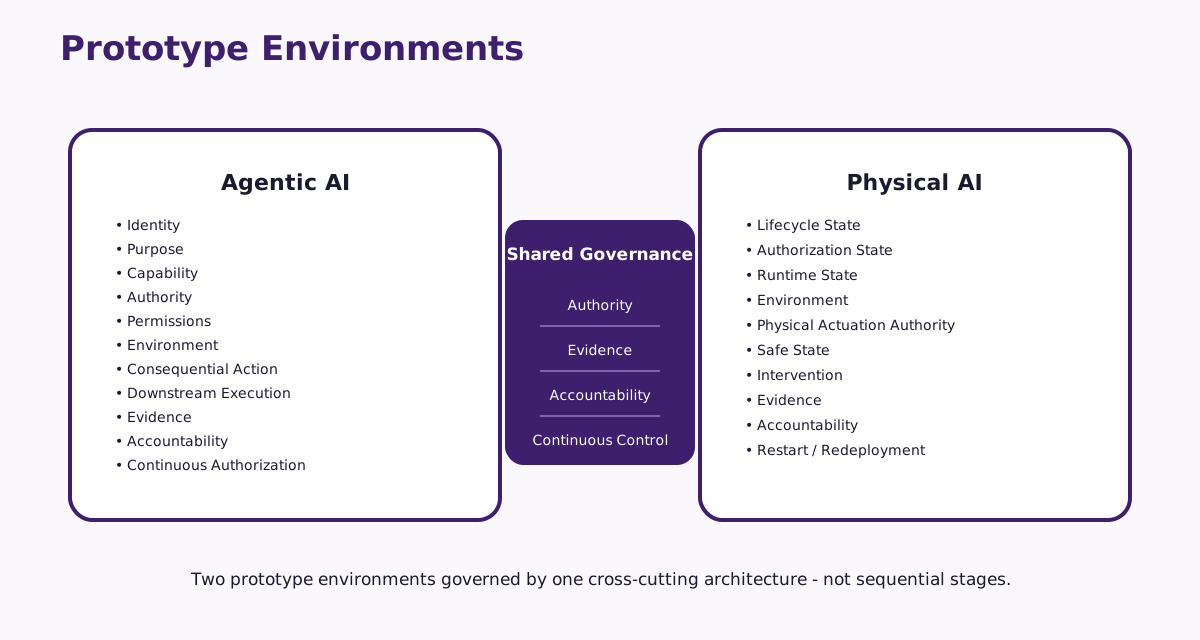
Prototype Environment I
Synthetic example: an enterprise software-change agent is assigned to perform an approved configuration update.
This example is synthetic and non-normative. It demonstrates conceptual architectural application and does not disclose production implementation logic.
Prototype Environment II
Synthetic example: an autonomous warehouse transport system operates within an approved facility zone.
SYNTHESIZE™ provides the SBJ Physical AI governance methodology associated with this environment. This demonstration is synthetic and non-normative. Gated SYNTHESIZE™ mechanics and production control implementation remain proprietary.
V1.0 Real-World Benchmark
SBJ AI Governance Architecture V1.0 was independently benchmarked against six publicly documented real-world AI cases and validated with material limitations within the tested scope.
185 applicable determinations
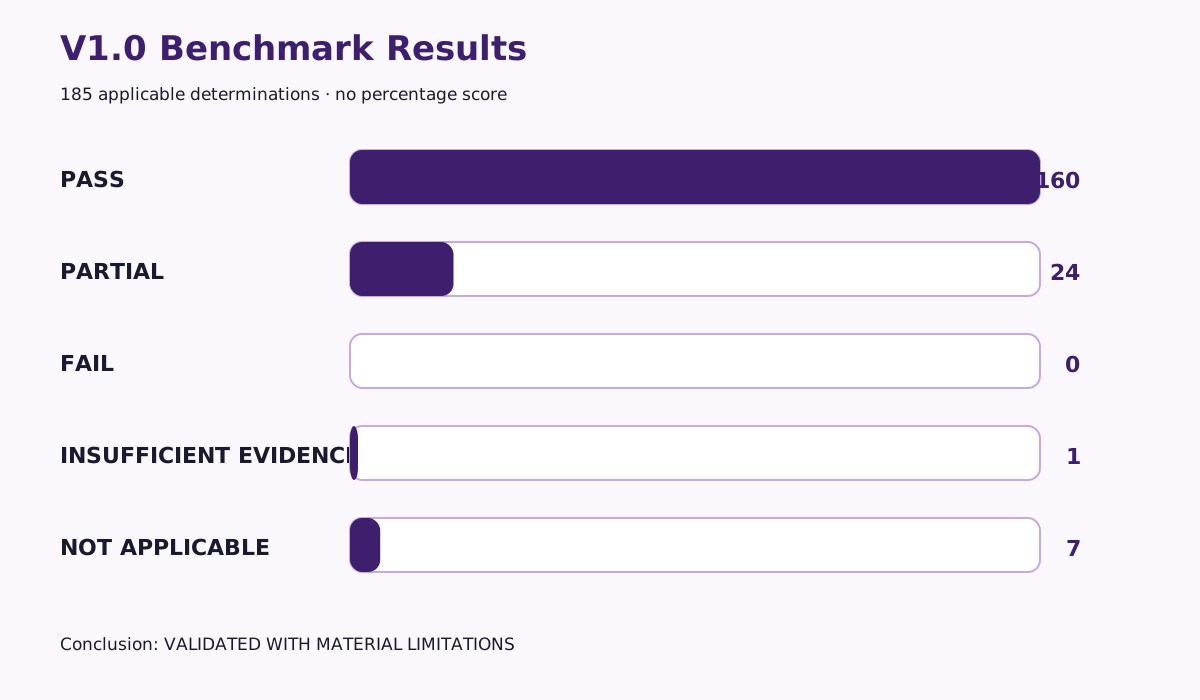
No structural failure was demonstrated by the approved six-case cohort. This finding is limited to the tested scope and does not establish universal architectural sufficiency.
No percentage score is assigned.
Adversarial Testing Cycle 1
Following the completed real-world benchmark, SBJ AI Governance Architecture V1.0 underwent a two-phase adversarial testing cycle designed for falsification, blind-spot discovery, edge-case testing, and identification of architecture gaps or ambiguities.
SBJ AI Governance Architecture V1.0 was not falsified at the architectural-rule level during Adversarial Testing Cycle 1. Across the tested scenarios, no candidate architectural gap survived repeated falsification against existing V1.0 rules.
Final disposition: Resolved. The single architectural ambiguity identified during Cycle 1 was resolved through authoritative interpretation of existing V1.0 consequence/exposure, Continuous Control, and Transition Authorization logic. No new Governance Dimension, state axis, runtime state, or architecture construct was introduced.
The interpretation establishes that consequence/exposure includes material changes in how AI outputs are operationally consumed, acted upon, escalated, automated, or embedded in downstream workflows, including cases where the AI system itself has not technically changed.
Testing: Complete
Architecture: Frozen
Confirmed gaps: 0
Structural failures: 0
V1.0 modifications: 0
Unresolved V1.0 architecture findings: 0
Lifecycle: Closed
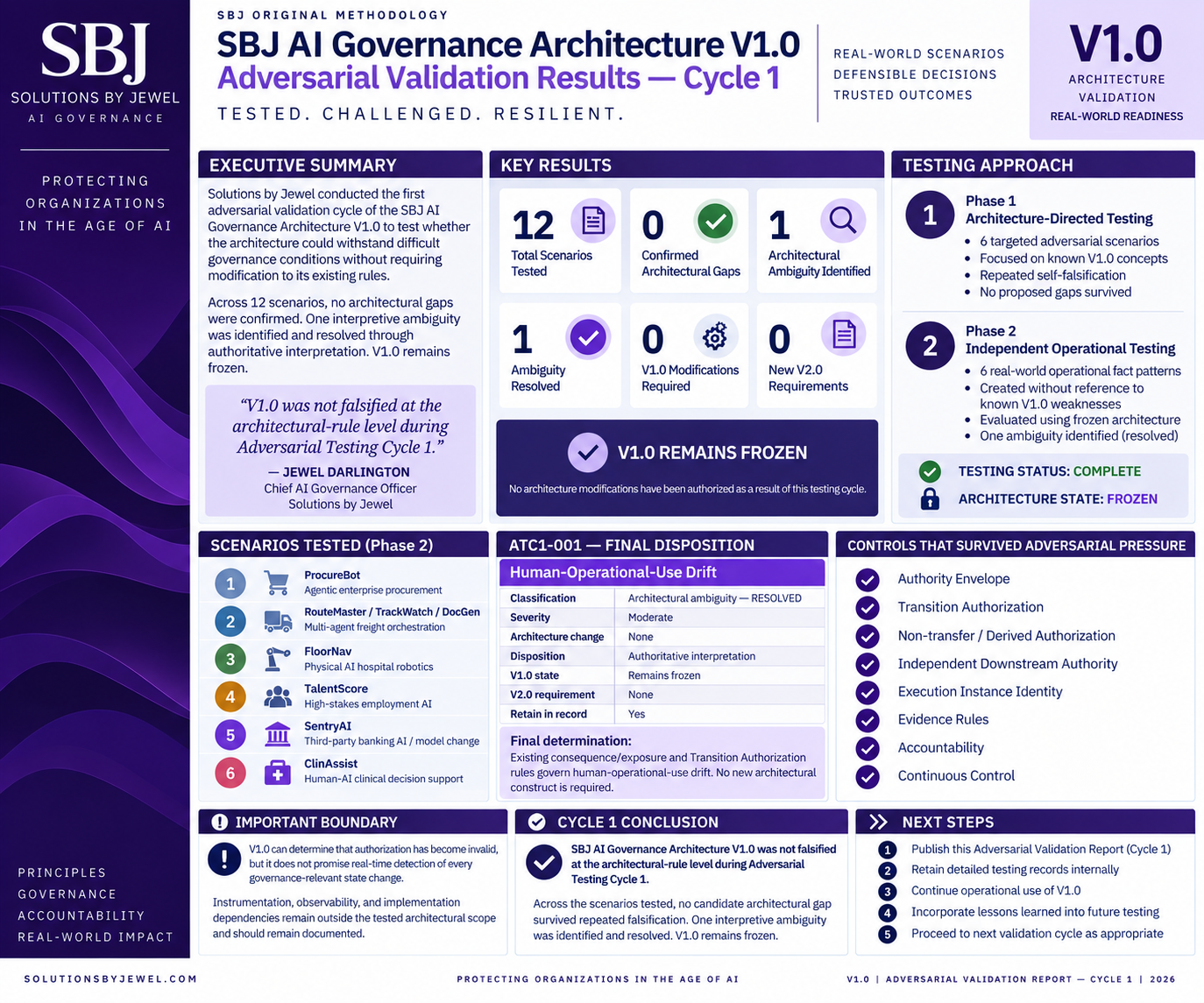
Scope boundary: This adversarial testing conclusion does not establish that V1.0 is complete, safe, compliant, or universally valid. V1.0 remains validated with material limitations within the tested scope.
Material Limitations
Further work is required around how changes in governed conditions invalidate or require reassessment of existing authorization.
Technical ability or valid credentials alone may not establish governance authority for the meaning, purpose, or consequence of an action.
Complex execution chains require stronger representation of authority provenance when authority branches, passes through intermediaries, or is delegated downstream.
Further development is required to establish sufficiently durable relationships among execution identity, system version, configuration, environment, and governed action.
Distributed AI systems may involve multiple organizations, systems, providers, operators, or control owners. Evidence responsibility across those relationships requires additional development.
Additional work is required around the completeness, integrity, preservation, retention, and continued availability of governance evidence, particularly when evidence reflects failures, interventions, exceptions, or adverse outcomes.
Validation Coverage Gap
Autonomous irreversible material financial transactions were not adequately represented in the V1.0 benchmark cohort. No validation claim is made for that authority class.
Public / Proprietary Boundary
V1.0 publicly discloses the approved architecture concepts, methodology relationships, sanitized prototype demonstrations, benchmark methodology summary, cohort, results, scope, limitations, and selected public evidence citations.
Public disclosure of the architecture does not grant permission to reproduce or operationalize protected implementation mechanics.
Scoring logic; weighting logic; certification mechanics; derivation rules; evidence sufficiency logic; detailed evidence relationships; authorization-condition logic; enforcement mappings; integrated Operational Authorization Layer implementation; Transition Authorization implementation logic; Derived Authorization implementation logic; Decision-to-Action traceability implementation mechanics; Execution Instance Identity integration mechanics; production schemas; machine-executable policy logic; control dependency logic; internal benchmark working papers; and V1.1/V2 implementation work.
Independent Evaluation Disclaimer
Solutions by Jewel independently evaluated its governance architecture against publicly documented information concerning the referenced systems and organizations. The referenced executives and organizations did not participate in, sponsor, endorse, approve, certify, or validate the SBJ methodology or benchmark. References are used solely as external evidence for independent architecture testing.
Sources & Technical References
External references inform terminology, standards context, and the public evidence used for independent architecture testing. Their inclusion does not imply sponsorship, endorsement, certification, or validation of SBJ methodology.
Downloadable Publication Companion
The website is the canonical public source of truth. The PDF is a supporting publication companion.
Related SBJ Governance Resources
Enterprise Advisory
This architecture is an original methodology developed by Solutions by Jewel.
It is informed by recognized public standards, regulatory guidance, and established governance practices; however, its structure, terminology, sequencing, and presentation are proprietary to Solutions by Jewel.
It is not a reproduction, certification, or official interpretation of any external framework.
Organizations may map this architecture to applicable laws, regulations, standards, contractual requirements, and internal policies according to their own scope and obligations.